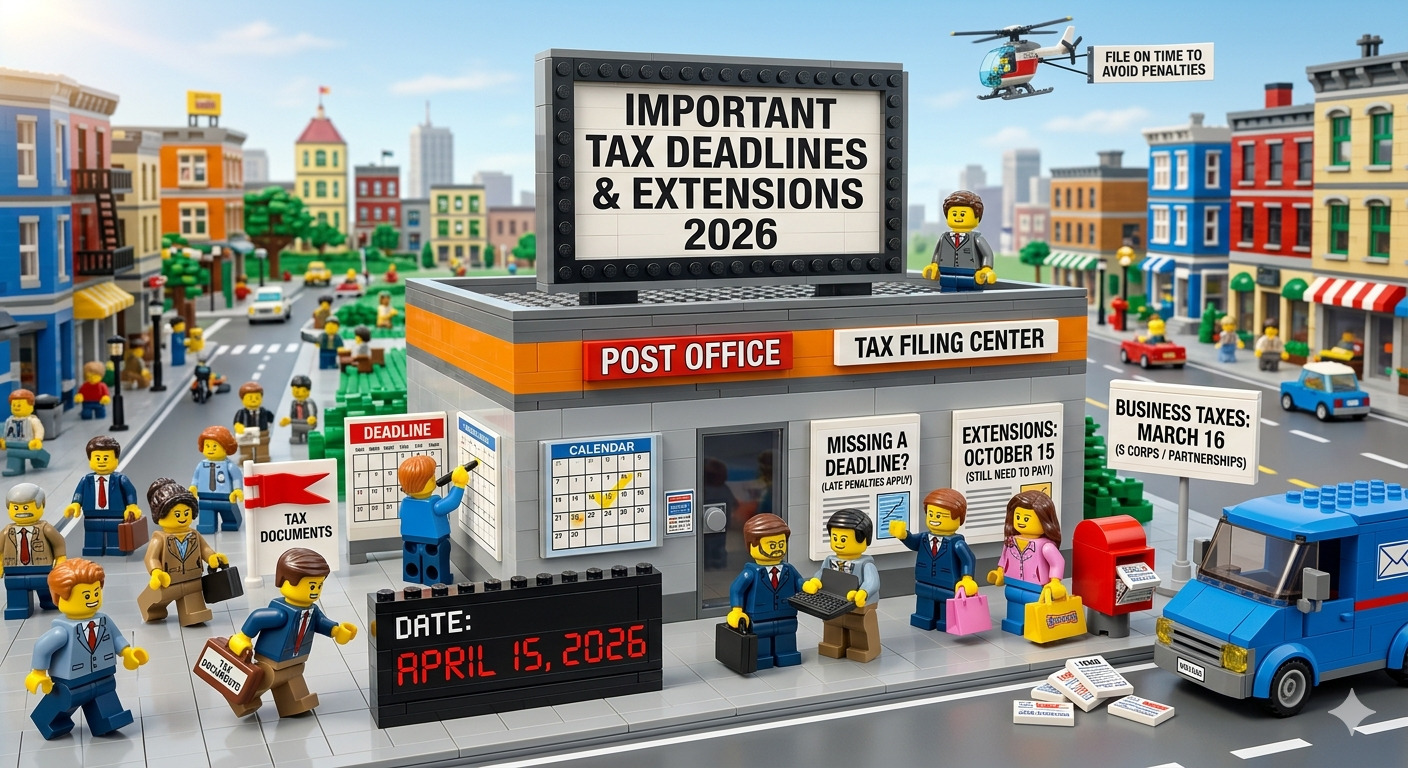
Why Knowing Tax Deadlines Is Critical for Businesses and Individuals
Every year, millions of taxpayers across the United States rush to meet tax filing deadlines. Unfortunately, many individuals and business owners wait until the last minute to gather documents, prepare returns, or calculate their tax obligations.
When deadlines are missed, the consequences can include late-filing penalties, late-payment penalties, and interest charges that accrue over time. In some cases, taxpayers who delay filing for multiple years may eventually face IRS collection activity that leads to larger financial problems.
Understanding the key 2026 tax deadlines is one of the most effective ways to avoid unnecessary penalties and ensure your tax filings remain compliant.
For both individuals and businesses, marking important dates on your calendar and preparing well in advance can prevent costly mistakes and reduce stress during tax season.
This guide explains the most important federal tax filing deadlines for 2026, how extensions work, and why timely filing is essential to avoid IRS penalties.
Why Filing Taxes on Time Matters
Many taxpayers assume that missing a filing deadline is not a major issue if they eventually submit the return. However, the IRS imposes penalties for both late filing and late payment, and these penalties can accumulate quickly.
The late filing penalty is typically higher than the late payment penalty, which means failing to file a return can become expensive even if the taxpayer eventually pays the balance.
Timely filing helps taxpayers:
- Avoid late filing penalties
- Minimize interest on unpaid taxes
- Prevent IRS notices and enforcement actions
- Maintain accurate financial records
- Reduce the risk of audits or disputes
Even if you cannot pay your full tax balance immediately, filing your return on time can significantly reduce penalties.
Key Individual Tax Deadlines for 2026
For most individual taxpayers, the primary federal income tax filing deadline falls in April.
April 15, 2026 – Individual Tax Return Deadline
Most individuals must file their federal income tax returns for the 2025 tax year by April 15, 2026.
This deadline applies to taxpayers filing:
- Form 1040
- Form 1040-SR (for certain seniors)
If the deadline falls on a weekend or federal holiday, it may shift slightly, but April 15 is generally the date taxpayers should plan around.
Individuals must also pay any taxes owed by this deadline to avoid penalties and interest.
Quarterly Estimated Tax Payment Deadlines
Taxpayers who earn income that is not subject to withholding — such as freelancers, contractors, and business owners — often need to make quarterly estimated tax payments.
For the 2026 tax year, estimated payments are generally due on the following dates:
- April 15, 2026 – First quarterly payment
- June 15, 2026 – Second quarterly payment
- September 15, 2026 – Third quarterly payment
- January 15, 2027 – Fourth quarterly payment
Failing to make these payments on time may result in underpayment penalties, even if the taxpayer pays the full balance when filing the return.
Proper planning and income tracking help ensure estimated payments are accurate and timely.
Key Business Tax Deadlines for 2026
Businesses have several different tax deadlines depending on their entity structure.
Understanding these dates are essential to avoid late-filing penalties.
March 16, 2026 – S Corporation and Partnership Returns
Businesses operating as S corporations or partnerships typically must file their tax returns by March 16, 2026.
These returns include:
- Form 1120-S for S corporations
- Form 1065 for partnerships
Although these entities usually do not pay federal income tax directly, they must file informational returns and provide Schedule K-1 forms to owners or partners.
Late filing penalties can apply even if no tax is owed.
April 15, 2026 – C Corporation Returns
C corporations generally must file their federal income tax return by April 15, 2026, if they operate on a calendar-year basis.
These businesses file Form 1120, which reports corporate income and calculates tax liability.
Corporations must also pay any taxes owed by the filing deadline.
Payroll and Employment Tax Deadlines
Businesses with employees must also stay current with payroll tax obligations throughout the year.
These responsibilities include:
- Depositing payroll taxes regularly
- Filing quarterly payroll reports
- Issuing employee wage statements
Missing payroll tax deadlines can lead to significant penalties and enforcement actions.
Maintaining accurate payroll records and working with experienced professionals can help businesses remain compliant.
How Tax Filing Extensions Work
Some taxpayers may not be ready to file their returns by the deadline. In these situations, the IRS allows taxpayers to request an extension of time to file.
However, it is important to understand what an extension actually does.
Extensions Allow More Time to File — Not More Time to Pay
An extension gives taxpayers additional time to submit their tax return, but it does not extend the deadline to pay taxes owed.
If you expect to owe taxes, you must still estimate and pay that amount by the original filing deadline to avoid penalties and interest.
Individual Tax Extension Deadline
Individuals who request an extension typically receive an additional six months to file their tax return.
For the 2026 filing season, an approved extension would generally move the filing deadline to:
October 15, 2026
This extra time can be helpful for taxpayers waiting on documents or needing additional preparation time.
Business Tax Extensions
Businesses may also request extensions depending on their entity type.
Common extended deadlines include:
- September 15, 2026, for partnerships and S corporations
- October 15, 2026, for many C corporations
Although extensions provide additional time for filing paperwork, estimated tax payments must still be made by the original due date.
Common Reasons Taxpayers Miss Filing Deadlines
Many late filings occur due to preventable issues.
Some of the most common causes include:
- Waiting too long to gather tax documents
- Missing income statements such as W-2s or 1099s
- Disorganized financial records
- Complex business transactions that require additional review
- Underestimating how long tax preparation will take
Starting early and organizing financial records throughout the year can prevent these problems.
Consequences of Missing Tax Deadlines
Failing to file or pay taxes on time can trigger several financial consequences.
These may include:
Late Filing Penalties
The IRS may charge penalties for each month a tax return is filed late, up to a maximum percentage of the unpaid tax.
Late Payment Penalties
If taxes remain unpaid after the deadline, additional penalties may apply until the balance is satisfied.
Interest Charges
Interest accrues on unpaid taxes from the original due date until the balance is paid in full.
IRS Collection Activity
In more serious cases, unpaid tax balances may eventually result in collection actions, such as liens or levies.
Addressing tax obligations promptly helps prevent these situations.
How Early Preparation Makes Tax Season Easier
One of the best ways to avoid missed deadlines is to prepare for tax season long before filing dates arrive.
Both individuals and businesses should focus on:
- Maintaining organized financial records
- Tracking income from all sources
- Saving receipts and deduction documentation
- Reviewing financial statements regularly
- monitoring estimated tax obligations
These practices reduce last-minute stress and improve the accuracy of tax filings.
When Professional Guidance Can Help
Tax filing requirements can become complex, especially for business owners, freelancers, and individuals with multiple income sources.
Professional guidance can help taxpayers:
- Identify filing deadlines specific to their situation
- Prepare accurate returns
- Avoid penalties and filing errors
- ensure estimated tax payments are properly calculated
Early involvement of experienced professionals can simplify the process and prevent costly mistakes.
Stay Ahead of the 2026 Tax Deadlines
Tax deadlines arrive quickly each year, and waiting until the last minute can create unnecessary stress and financial risk.
By marking important filing dates now and organizing financial records early, taxpayers can approach tax season with confidence.
Timely filing not only prevents penalties but also helps maintain strong financial management practices throughout the year.
Mark Your Calendar: Key Tax Deadlines
If you want to avoid late filing penalties and stay on track for the 2026 tax season, start planning now.
Knowing the key deadlines and preparing early can help ensure your returns are filed accurately and on time.
Mark your calendar with the important tax deadlines and take steps today to stay prepared for the upcoming filing season.
