Why Proactive Tax Planning Matters More Than Ever
For many business owners, tax planning is something that happens in March or April when deadlines are approaching. Unfortunately, waiting until tax season to think about taxes often leads to missed deductions, unexpected tax bills, and unnecessary financial stress.
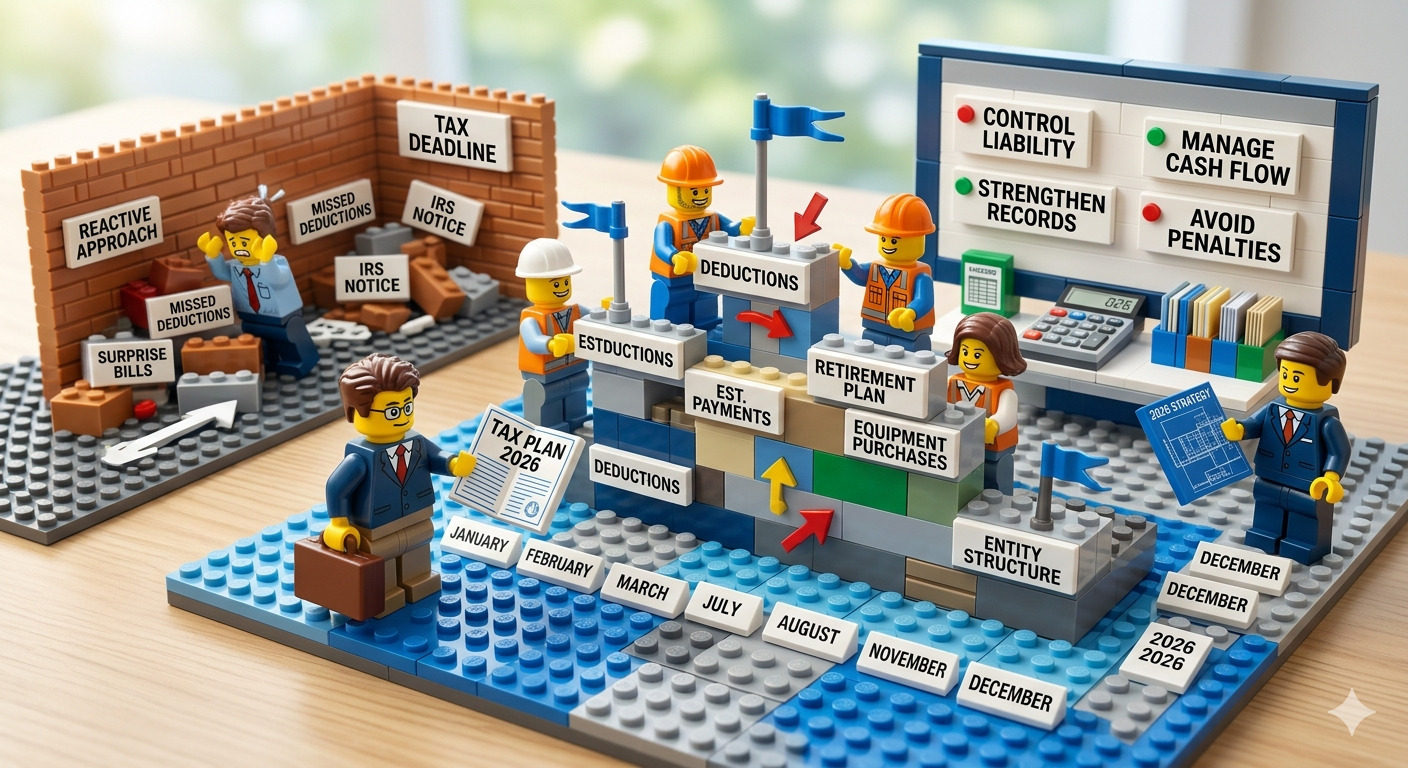
The most successful businesses approach taxes differently. Instead of reacting to tax obligations after the year ends, they implement proactive tax planning strategies throughout the year.
As we move into 2026, early tax planning is one of the most effective ways for businesses to control tax liability, improve cash flow, and avoid unpleasant surprises when filing deadlines arrive.
For companies across the United States, proper planning can help identify opportunities to reduce taxable income, optimize deductions, and ensure compliance with federal tax requirements. Just as importantly, proactive planning helps prevent issues that could eventually lead to IRS notices, audits, or tax debt.
Whether you are a small business owner, independent contractor, partnership member, or corporate executive, developing a clear tax strategy early in the year can make a substantial difference in your financial outcome.
The Difference Between Tax Preparation and Tax Planning
Many taxpayers assume that tax preparation and tax planning are the same, but they serve very different purposes.
Tax preparation involves completing and filing tax returns based on financial activity that has already occurred.
Tax planning, on the other hand, involves evaluating financial decisions before year-end to legally and efficiently reduce taxes.
For businesses, this might include decisions about:
- Timing of income and expenses
- Equipment purchases
- Employee benefits
- Retirement contributions
- Entity structure
- Estimated tax payments
The earlier these decisions are made, the more flexibility businesses have to optimize their tax outcomes.
Waiting until year-end limits available strategies and increases the likelihood of costly surprises.
Why Businesses Should Start Tax Planning Early in 2026
Starting tax planning early provides several important advantages.
Greater Control Over Tax Liability
When tax strategies are implemented early in the year, businesses can make adjustments throughout the year rather than scrambling to reduce tax exposure at the last minute.
For example, planning allows business owners to time purchases, manage deductions, and structure income more effectively.
Better Cash Flow Management
Unexpected tax bills can disrupt business operations and strain cash flow.
Proactive planning allows businesses to estimate tax obligations more accurately and prepare for upcoming payments.
Reduced Risk of IRS Issues
Poor recordkeeping and rushed tax filings are common reasons businesses encounter IRS notices or audits.
Planning helps ensure financial records are accurate, organized, and consistent with reported income.
Improved Financial Decision-Making
Tax planning also supports broader financial goals, helping business owners make informed decisions about expansion, hiring, and investment.
When tax implications are considered in advance, businesses can avoid costly mistakes.
Key Tax Planning Considerations for 2026
Every business is different, but several tax planning strategies should be reviewed early in the year.
Review Your Business Entity Structure
One of the most important tax decisions business owners make involves choosing the right business structure.
Common structures include:
- Sole proprietorship
- Partnership
- S corporation
- C corporation
- Limited liability company (LLC)
Each structure has distinct tax implications for income, payroll, and liability exposure.
For example, certain businesses may benefit from electing S corporation status, which can sometimes reduce self-employment tax obligations. However, this structure also comes with additional compliance requirements.
A periodic review of your entity structure helps determine whether your current setup remains the most tax-efficient option.
Plan for Estimated Tax Payments
Many businesses are required to make quarterly estimated tax payments.
These payments cover income taxes and self-employment taxes for business owners.
Failing to make proper estimated payments can result in penalties and interest, even if the full tax amount is eventually paid.
To avoid these penalties, businesses should:
- Estimate expected annual income
- Calculate quarterly payment obligations
- Set aside funds throughout the year
Proper planning ensures payments are manageable and predictable.
Track and Maximize Business Deductions
One of the most effective ways to reduce tax liability is by claiming all legitimate business deductions.
However, deductions must be properly documented and supported.
Common business deductions include:
- Office expenses
- Software and technology subscriptions
- Business travel and transportation
- Marketing and advertising costs
- Professional services
- Equipment and supplies
Maintaining organized financial records throughout the year ensures these deductions are not overlooked.
Many businesses lose valuable deductions simply because receipts or documentation were not retained.
Consider Equipment Purchases and Capital Investments
Purchasing equipment or technology can have significant tax implications.
Under certain tax provisions, businesses may be able to deduct a large portion of qualifying purchases in the year they are placed in service.
Examples of qualifying purchases may include:
- Machinery
- Computers and technology equipment
- Office furniture
- Specialized tools
However, the timing of these purchases matters.
Making strategic decisions about when to acquire assets can influence how deductions are applied and how they affect taxable income.
Planning ensures purchases align with broader financial and tax goals.
Evaluate Retirement Contributions
Retirement plans are not only beneficial for long-term financial security—they can also provide significant tax advantages.
Business owners may have access to several retirement options, including:
- SEP IRAs
- Solo 401(k) plans
- SIMPLE IRAs
- Traditional 401(k) plans for employees
Contributions to these plans can often reduce taxable income while helping owners and employees build retirement savings.
Early planning allows businesses to structure contributions effectively before the year ends.
Strengthen Financial Recordkeeping
Strong recordkeeping is one of the most important elements of effective tax planning.
Disorganized financial records increase the risk of errors and missed deductions. They also make it difficult to respond if the IRS requests additional documentation.
Businesses should ensure they maintain:
- Accurate bookkeeping systems
- Organized receipts and expense records
- Separate business bank accounts
- Consistent financial reporting
Regular financial reviews throughout the year can help identify discrepancies before they become problems.
Monitor Changing Tax Regulations
Tax laws and regulations change regularly, and those changes can affect business planning strategies.
New legislation may influence:
- Deduction eligibility
- Depreciation rules
- Payroll tax obligations
- credits or incentives
Staying informed about regulatory changes helps businesses adjust strategies accordingly.
Professional guidance can be especially valuable when interpreting complex tax rules.
Avoid the Most Common Business Tax Mistakes
Many businesses encounter tax issues not because they intended to avoid compliance, but because of preventable mistakes.
Some of the most common problems include:
- Failing to track income from all sources
- Mixing personal and business finances
- Missing estimated tax payments
- Poor documentation for deductions
- Waiting until tax season to review finances
These mistakes can lead to penalties, audits, and unexpected tax liabilities.
Developing a proactive tax planning strategy helps prevent these issues before they arise.
Why Professional Tax Planning Can Make a Difference
Tax planning involves more than simply reviewing financial statements.
An experienced professional can help businesses:
- Identify overlooked deductions
- Evaluate entity structure options
- Develop long-term tax strategies
- Address potential compliance risks
- Prepare for future regulatory changes
Early professional involvement also allows businesses to address potential issues before they attract the IRS’s attention.
In many cases, proactive guidance can prevent tax problems that might otherwise require extensive resolution efforts later.
Start Planning Now to Avoid Year-End Surprises
Tax season should never be the first time business owners think about their tax obligations.
By taking a proactive approach in 2026, businesses can reduce uncertainty, strengthen financial management, and position themselves for a smoother filing season.
Early tax planning allows business owners to take advantage of opportunities that may no longer be available once the year ends.
Instead of scrambling to gather documents or worrying about unexpected liabilities, businesses that plan can approach tax season with confidence.
Schedule a Consultation to Discuss Your 2026 Tax Strategy
Effective tax planning starts with understanding your business’s financial situation and identifying opportunities to reduce risk and improve outcomes.
If you want to avoid year-end surprises and ensure your business is prepared for the 2026 tax year, professional guidance can make a significant difference.
Schedule a consultation today to review your business tax strategy and develop a proactive plan for the year ahead.
